%20(1)_edited.png)
- Oct 8, 2025
- 2 min read

Breed Guide
Sphynx
General InformationThe Sphynx is a distinctive, hairless cat breed known for its wrinkled skin, large ears, and striking appearance. Despite its lack of fur, the Sphynx is exceptionally warm and affectionate, often seeking out human attention and companionship. Highly energetic and playful, this breed enjoys interactive toys, climbing, and exploring its environment. Sphynx cats are social, intelligent, and curious, forming strong bonds with their families and thriving in lively, interactive homes. |
Physical:
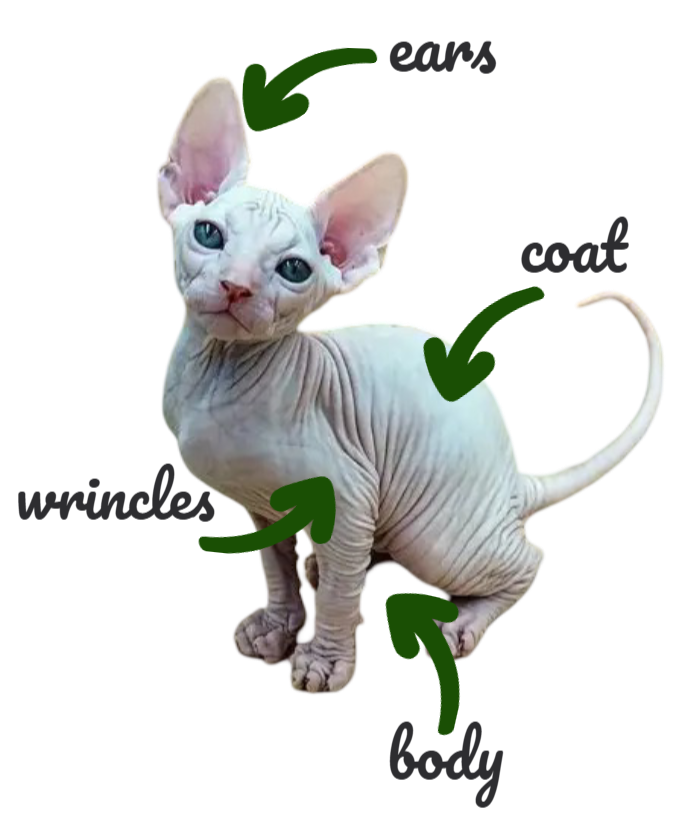
The Sphynx is a medium-sized, muscular cat with a wedge-shaped head, prominent cheekbones, and large, lemon-shaped eyes. Its most distinctive feature is the near-complete lack of fur, though some may have a fine peach-fuzz coat. The skin often shows wrinkles, especially around the head, neck, and shoulders. True Sphynx cats have strong, athletic bodies, long, tapering tails, and prominent ears set wide apart. Their skin should feel warm and soft to the touch, and their body proportions must be balanced, distinguishing them from hairless cats of mixed origin.
Personality:
Sphynx cats are affectionate, outgoing, and highly social. They crave human attention and often follow their owners around the house, enjoying cuddles and lap time. Intelligent and curious, they love interactive play, climbing, and puzzle toys that challenge their minds. Sphynx cats are energetic and lively, yet gentle, forming strong bonds with family members and often greeting visitors with curiosity rather than shyness. Their playful and loving nature makes them devoted companions.
Health & Care:
The Sphynx is almost completely hairless, though it may have a very fine, soft down on its body that feels like peach fuzz. Some cats have slightly thicker fuzz on the nose, ears, or tail. Because of its lack of fur, the Sphynx requires regular skin care to remove oils and prevent buildup. Its “coat” is low-maintenance in terms of brushing, but the skin itself needs attention to stay clean and healthy.
Hygiene
Weekly or bi-weekly baths with a mild, cat-safe shampoo are recommended to remove excess oils and dirt.
Nails should be trimmed every 2–3 weeks with a proper cat nail clipper.
Teeth should be brushed 2–3 times per week using a cat toothbrush and pet-safe toothpaste—ask a vet to demonstrate proper technique if you’ve never done this before.
Ears should be checked weekly and cleaned gently with a cotton pad or a vet-recommended solution as needed.
Common Health IssuesSphynx cats are generally healthy but can be prone to certain conditions: hypertrophic cardiomyopathy (HCM), a genetic heart disease, skin infections, and respiratory issues due to their lack of fur. Regular veterinary check-ups, proper skin care, and a balanced diet are essential for maintaining their long-term health. |
History:
Origin
The Sphynx originated in Canada in the 1960s when a hairless kitten was born naturally in a domestic litter. Breeders developed the breed through careful selection and outcrossing to maintain genetic diversity while enhancing the hairless trait. Recognized for its unique appearance and affectionate personality, the Sphynx quickly gained popularity worldwide and is now recognized by major cat associations.


Comments