%20(1)_edited.png)
- Oct 8, 2025
- 3 min read

Breed Guide
Savannah
General InformationThe Savannah is a striking and exotic cat breed, renowned for its tall, lean physique, spotted coat, and wild appearance. Bred from a domestic cat crossed with a serval, Savannahs are adventurous, energetic, and highly intelligent cats that demand an interactive and stimulating environment. They are known for their loyalty and strong bond with their owners, often following them around like a dog and displaying playful, curious behaviors. Savannahs vary significantly depending on their filial generation (F1, F2, F3, etc.), with F1s being closest to the serval ancestor and therefore exhibiting more wild traits, higher energy, and distinctive physical characteristics, while later generations (F3–F5) are more domesticated, slightly smaller, and generally more adaptable to family life. Understanding these generational differences is key to knowing what to expect in terms of personality, size, and behavior. |
Physical:
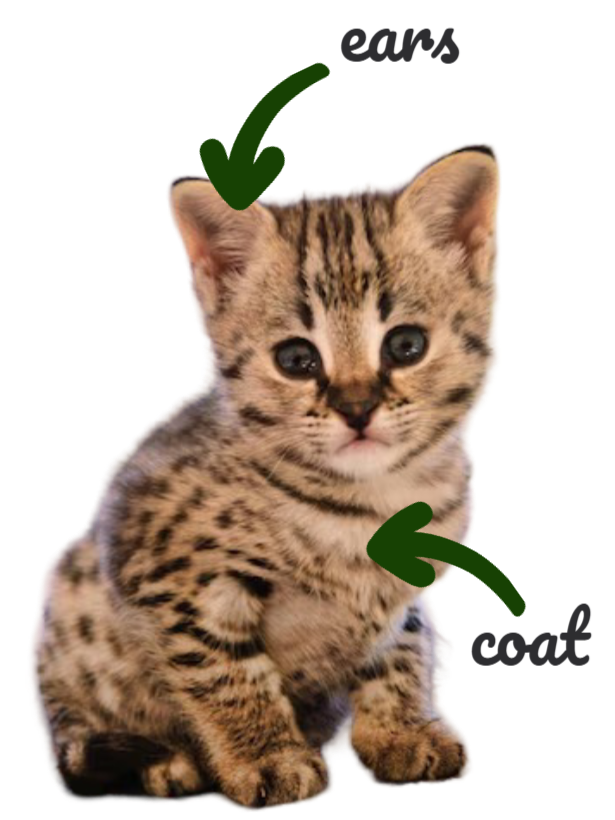
Savannahs are long-legged, slim, and athletic, giving them an unmistakable wild look. Their coat is short to medium, dense, and beautifully spotted or marbled, often with a golden, tan, or silver background. Large ears, almond-shaped eyes, and a long, lean neck are characteristic features, particularly in the early generations (F1–F2).
F1 Savannahs: Largest, most serval-like, with extremely long legs, prominent ears, and a very wild demeanor. They often weigh 9–15 kg.
F2 Savannahs: Slightly smaller, still athletic and wild-looking, with strong serval traits.
F3 +: More domestic proportions, smaller in size (6–9 kg), retaining the exotic look but with calmer behavior.
True Savannah cats are recognized by their spotted or marbled coats, long legs, large ears, and striking serval-like features.
Personality:
Savannahs are highly energetic, intelligent, and curious. F1 and F2 cats often retain more of the serval’s independence and alertness, while F3–F5 generations are more sociable and easier to integrate into typical households. All Savannahs are playful, love interactive toys, climbing, and exploring, and often enjoy water. They are loyal and can bond strongly with their family, sometimes forming attachments similar to a dog. Early generations may require more space, enrichment, and patient socialization to thrive, whereas later generations are generally more adaptable to family routines and interactions with children and other pets.
Health & Care:
Savannahs have a short to medium coat that lies close to the body, showcasing their striking spotted or marbled patterns. Grooming is relatively easy; weekly brushing keeps the coat shiny and healthy. Despite the exotic appearance, their fur is low-maintenance, although early-generation cats (F1–F2) may shed more due to higher metabolism and active lifestyles.
Hygiene
Occasional baths using a mild, cat-safe shampoo help keep the coat clean, particularly for long-haired varieties, but daily bathing is unnecessary.
Nails should be trimmed every 2–3 weeks with a proper cat nail clipper.
Teeth should be brushed 2–3 times per week using a cat toothbrush and pet-safe toothpaste—ask a vet to demonstrate proper technique if you’ve never done this before.
Ears should be checked weekly and cleaned gently with a cotton pad or a vet-recommended solution as needed.
Common Health IssuesSavannahs are generally healthy, but early generations (F1–F2) may have higher sensitivity to diet and stress, and some may develop hypertrophic cardiomyopathy (HCM). Later generations (F3–F5) are more robust and adaptable. Proper nutrition, plenty of exercise, and mental stimulation are essential to prevent obesity, stress-related behaviors, and maintain cardiovascular health. |
History:
Origin
The Savannah originated in the United States in the 1980s by crossing domestic cats with African servals to create a hybrid that retained the serval’s exotic look and agility. Breeders selectively developed multiple filial generations (F1–F5) to produce cats with varying degrees of wild traits and domestic suitability. F1 and F2 cats remain closer to the serval in appearance and behavior, while F3–F5 cats are more adaptable to family life. Today, Savannahs are celebrated for their exotic beauty, intelligence, and strong bond with their owners, making them one of the most fascinating hybrid breeds in the world.


Comments