%20(1)_edited.png)
- Oct 6, 2025
- 3 min read
Breed Guide
Russian Blue
General InformationThe Russian Blue is a graceful and intelligent cat breed admired for its shimmering silver-blue coat, vivid green eyes, and reserved elegance. Known for its gentle and loyal personality, the Russian Blue forms deep bonds with its family while remaining somewhat cautious around strangers. This breed is quiet, affectionate, and thrives in calm, predictable environments. Their dignified demeanor, combined with playful bursts of energy and keen curiosity, make them ideal companions for those who appreciate a loving but independent cat. |
Physical:

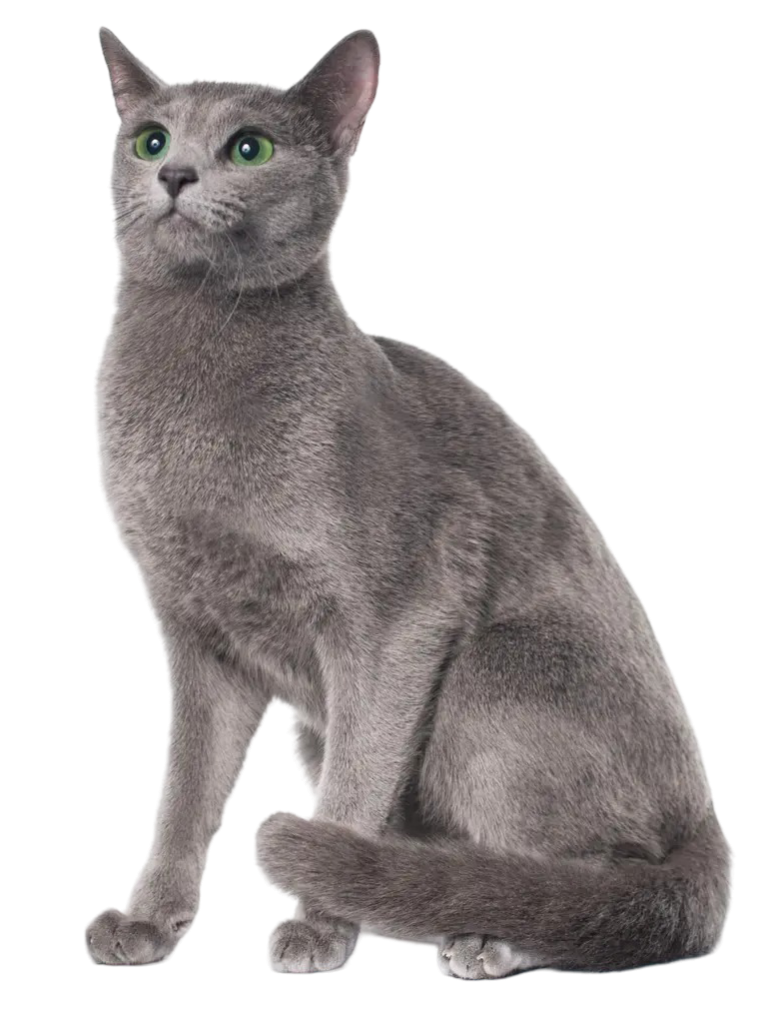
The Russian Blue is a medium-sized cat with a lean, muscular build and fine bone structure. Its most striking feature is the short, dense double coat, which has a plush, velvety texture and a unique silvery-blue shimmer caused by light-tipped guard hairs. The head is wedge-shaped with a straight nose, and the vivid emerald-green almond eyes give the breed a distinct, alert expression. The ears are large and pointed, while the legs are long and slender, ending in small, oval paws.
A true Russian Blue can be recognized by its uniform blue-gray coat with silver sheen, bright green eyes, and overall refined yet athletic silhouette—never bulky or heavy.
Personality:
The Russian Blue is known for its calm, affectionate, and intelligent personality. Though initially reserved with strangers, this breed is deeply loyal and forms a strong attachment to its trusted humans. They enjoy routine and a peaceful environment, often following their favorite person quietly from room to room. Russian Blues are playful but not overly demanding, preferring gentle interaction and quiet companionship over chaos. They communicate softly, are highly observant, and often seem to anticipate their owner’s moods, making them sensitive and emotionally intuitive pets.
Health & Care:
The Russian Blue’s coat is one of its most remarkable features. Despite its thickness, the coat is low-maintenance, requiring only weekly brushing to remove loose hair and maintain its shine. The Russian Blue rarely sheds excessively and produces less of the allergenic protein Fel d 1, making it a better choice for mild allergy sufferers.
Hygiene
Full baths are rarely needed and only when the cat is visibly dirty, using a mild, cat-safe shampoo.
Nails should be trimmed every 2–3 weeks with a proper cat nail clipper.
Teeth should be brushed 2–3 times per week using a cat toothbrush and pet-safe toothpaste—ask a vet to demonstrate proper technique if you’ve never done this before.
Ears should be checked weekly and cleaned gently with a cotton pad or a vet-recommended solution as needed.
Common Health IssuesThe Russian Blue is generally a healthy and long-lived breed, often living 15 to 20 years. However, they can be prone to obesity, especially since they have a good appetite but moderate activity levels. Maintaining a balanced diet and regular playtime helps prevent weight-related issues such as diabetes or joint problems. Some Russian Blues may also be sensitive to certain types of anesthesia, so it’s important to inform your vet before any surgical procedure. Overall, with proper care, they remain one of the most resilient and low-maintenance breeds. |
History:
Origin
The Russian Blue has a mysterious and elegant origin story that traces back to northern Russia, specifically the port city of Arkhangelsk. Sailors are believed to have brought these shimmering blue-grey cats to Europe in the 19th century, where they quickly gained admiration for their luxurious coats and regal looks. They were first officially shown in England around the 1870s, and breeders later refined the line to maintain their signature silver-blue fur and vivid green eyes. Despite their royal appearance, Russian Blues have humble beginnings as natural cats adapted to cold climates, which gave them their dense, plush double coat.


Comments