%20(1)_edited.png)
- Sep 25, 2025
- 3 min read
Breed Guide
Donskoy
General InformationThe Donskoy, also known as the Don Sphynx or Russian Hairless, is a unique cat breed originating in Russia during the late 1980s. Unlike the Canadian Sphynx, whose hairlessness is caused by a recessive gene, the Donskoy’s lack of fur comes from a dominant gene. This results in several coat variations, ranging from completely bald to soft peach-fuzz-like hair, and sometimes even seasonal changes in coat coverage. |
Physical:

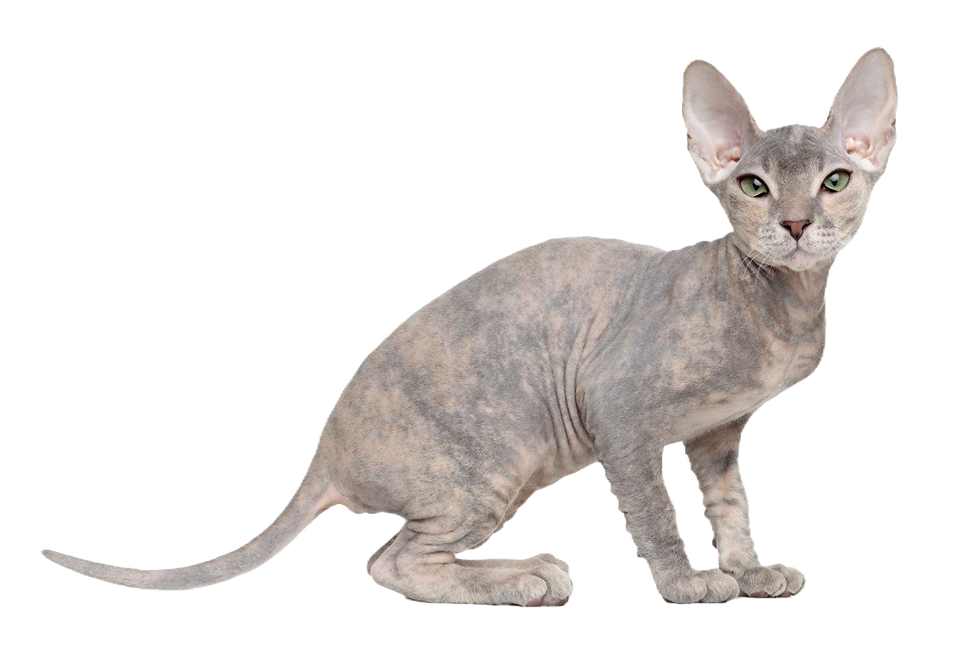
The Donskoy is a medium-sized cat with a strong, muscular build and an elegant, well-proportioned body. Its long legs end in slender, oval-shaped paws, giving it a graceful yet sturdy stance. The wedge-shaped head has prominent cheekbones, almond-shaped eyes, and large, wide-set ears that enhance its expressive look. The skin is soft and elastic, often with visible wrinkles around the neck, chest, and limbs. Depending on genetics, Donskoys may be completely bald, have a fine peach-like fuzz, or develop partial coats that can change with the seasons.
A true Donskoy can be identified by its unique skin texture and wrinkling, which differs from other hairless breeds like the Sphynx. Unlike the Sphynx, whose baldness is caused by a recessive gene, the Donskoy’s hairlessness comes from a dominant gene, making its skin slightly warmer, more elastic, and often more wrinkled in appearance.
Personality:
The Donskoy is a highly affectionate and people-oriented cat, often described as dog-like in its devotion to humans. They thrive on companionship, following their owners from room to room and rarely enjoying long periods alone. Intelligent and curious, they are quick to learn routines and may even figure out how to open doors or explore hidden places. Playful and energetic, Donskoys enjoy interactive toys and games, but they are equally happy curling up on a warm lap. Their gentle and social nature makes them excellent family pets, getting along well with children, other cats, and even dogs, provided they are introduced properly.
Health & Care:
The Donskoy is known for its mostly hairless appearance, though some may have a fine peach-fuzz coat or patches of soft, short hair. Their bare skin requires special care: instead of brushing, they need regular gentle wiping or occasional baths to remove natural oils and prevent buildup. Because they lack fur, Donskoys are more sensitive to temperature changes—owners should provide warm resting spots and protect them from direct sunlight. With proper skin care, their coat (or lack thereof) stays healthy and smooth.
Hygiene
Full baths are more common for the Donskoy than for coated breeds, as their bare skin produces natural oils that can build up. A gentle bath every 1–2 weeks with a mild, cat-safe shampoo helps keep the skin clean and healthy.
Nails should be trimmed every 2–3 weeks with a proper cat nail clipper; if you’re unsure, a veterinarian or professional groomer can assist.
Their teeth should be brushed 2–3 times per week using a cat toothbrush and pet-safe toothpaste—ask a vet to demonstrate proper technique if you’ve never done this before.
Ears should be checked weekly and cleaned gently with a cotton pad or a vet-recommended solution as needed, as hairless breeds may be more prone to wax buildup.
Common Health IssuesLike other hairless breeds, the Donskoy can be prone to skin-related issues such as oil buildup, acne, and sensitivity to temperature extremes. Regular baths and protection from sunburn or cold drafts are important. They may also experience dental problems if oral hygiene is neglected, so routine brushing is recommended. Overall, with proper care and regular veterinary checkups, the Donskoy is generally a healthy and resilient breed. |
History:
Origin
The Donskoy, also known as the Don Hairless, originated in Russia in the early 1980s. The breed was discovered when a hairless kitten, named Varvara, was born to a domestic shorthair cat near the Don River. Breeders recognized the unique hairless trait and began selectively breeding to preserve it, resulting in the distinct Donskoy breed known today.


Comments